


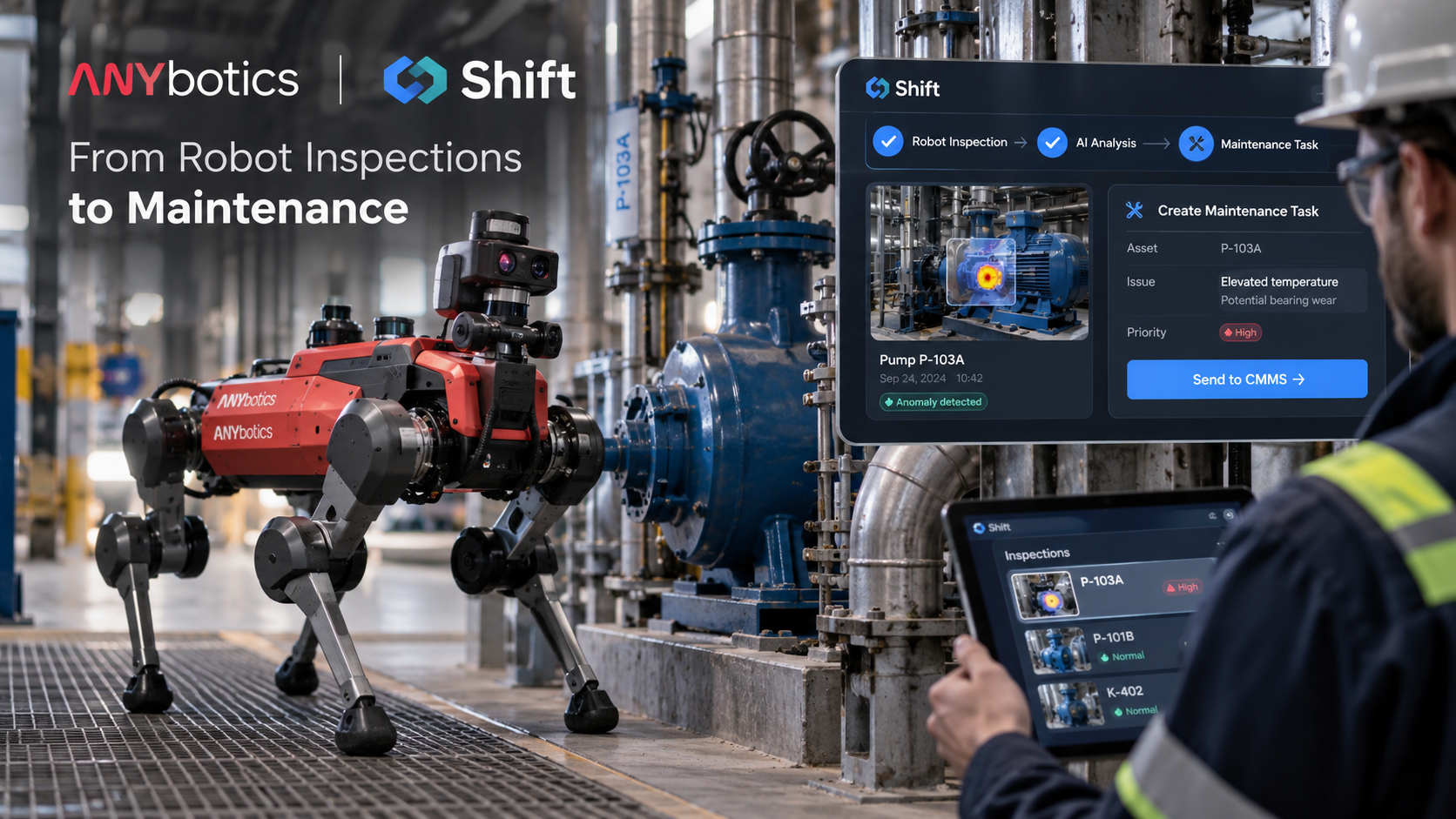
ANYbotics announced Shift on October 1, 2026, bringing robot fleet operations and industrial inspection findings into a shared maintenance workflow. The platform connects information about plant equipment with robot missions and the systems teams use to manage repairs. [1]
Connecting an inspection to the right equipment
According to ANYbotics, Shift combines plant mapping, fleet coordination, inspection analysis and connections to business systems. Operators can schedule missions and monitor robots, while maintenance teams review findings in the context of the equipment being inspected. Confirmed anomalies can feed into work orders. [1]
Shift is also the new name for Data Navigator. The company says existing customers keep their data, logins and integrations, with the new name appearing in the interface through the October Shift 1.0 release. Its customer update describes new ways to connect process information with inspection results and trigger follow-up missions. [2]
Why the handover matters
Our assessment is that the most useful test begins after the robot finishes its route. An inspection has limited value if the result ends up in a separate dashboard that nobody checks. The handover needs to identify the equipment, explain the observation and give a maintenance team enough evidence to decide what happens next.
Consider a pump that appears warmer than it did during a previous round. A useful review would compare operating conditions before treating the change as a fault. The practical question is whether the inspection helps someone make a better maintenance decision without creating unnecessary work.
What is available and what comes later
The product information says Shift currently operates ANYmal fleets. Support for third-party robot fleet management remains on the roadmap, with that management capability planned for next year. Customers should separate the existing platform from that expansion. [3]
A site trial could measure the time between an observation and a reviewed work order, alongside false alerts and repeat inspections. Those results would make the value of the workflow easier to judge than the number of readings collected alone.
